
A government-commissioned review led by Professor Peter Fonagy says rising rates of mental illness among young people reflect genuine hardship, and warns that long NHS waits are costing lives. Ministers have promised an overhaul of support.
Common mental disorders such as depression and anxiety among young people in England have risen by 50% since 1993, according to a major new review, which also finds that around one in five young people are now in serious distress.
The Independent Review into the prevalence of and support for mental health conditions, ADHD and autism was commissioned by the Department of Health and Social Care in December 2025. It was chaired by Fonagy, head of the UCL Division of Psychology and Language Sciences, with Professor Sir Simon Wessely and Professor Gillian Baird as vice chairs. It projects that the number of young people in England who have self-harmed will rise from two million to 2.5 million by 2030.
Fonagy rejected the suggestion that the increase reflects a "snowflake generation" or overdiagnosis. Last year, then-Health Secretary Wes Streeting told the BBC that overdiagnosis meant "too many people are being written off". He later apologised for the remarks.
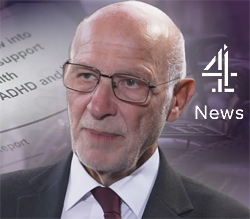 "That's not true," Fonagy told Channel 4 News. "What we have shown is a dramatic increase over the past 25 years of mental health problems, particularly amongst young people, particularly amongst young women."
Causes
The review attributes the rise to several factors, including social media, financial insecurity, uncertainty about the future, poorer sleep, and a reduced sense of connection and belonging. Fonagy pointed to a growing sense of hopelessness among Generation Z, who he said no longer expect a better life than their parents. "That is something we have done to them," he said.
Separate interim findings from Alan Milburn's review of young people and work found that, among 16 to 25-year-olds not in education, employment or training, 24% cited depression or anxiety as their main limiting condition, 22% autism and 18% another mental illness.
Waiting lists
The review found that more than a million children had an open referral to mental health services in a single year, with more than 60,000 of them waiting over two years. It also found that people with severe mental illness continue to have the poorest outcomes and least consistent access to care.
"You cannot have a million or a million-and-a-half people on a waiting list and think this is a functioning healthcare system," Fonagy said.
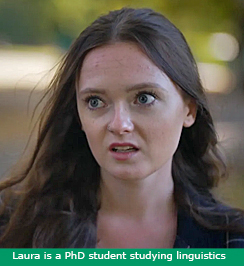 Laura, 25, a PhD student, said she spent years on a waiting list after her mental health began deteriorating at around the age of eight. An undiagnosed eating disorder first alerted her parents that something was wrong. She said that when the NHS contacted the family six months in to ask whether she still needed support, she was "worse than ever". She was later diagnosed with anxiety and OCD.
"If I had been able to access support sooner, then I am certain my conditions would not have worsened to the point they did," she said. She added that calling young people "snowflakes" is "offensive, ineffective and quite frankly untrue".
ADHD and autism
The review's roughly 600 pages also examine ADHD and autism. Around 650,000 people were waiting for an ADHD assessment as of last December, and more than 250,000 for an autism assessment, with over 90% waiting more than 13 weeks.
Referrals and diagnoses have risen significantly, but the review found that underlying prevalence has remained broadly stable since the turn of the millennium. Fonagy said social media and greater awareness may be channelling more people with difficulties towards these diagnoses. He also raised concerns about the growth of independent providers, whose diagnoses "may not be as thorough and as careful as they should be". The review suggests long NHS waits are pushing people towards such providers.
The authors note that many people seeking help have overlapping needs that do not fit a single diagnosis. They may be dealing with mental health difficulties, a developmental difference and tough life circumstances all at once.
Fonagy said diagnosis had increasingly become "a very narrow pathway to finding support". He called for a shift "from a diagnostic labelling model to a flexible, needs-led system". "Diagnosis remains essential and must be protected," he said. "What has to change is that it is no longer the only door through which help can be reached."
Government response
The government has committed to a major overhaul of mental health support in a forthcoming Mental Health Strategy, with a renewed focus on prevention and early intervention. It says it will improve support in schools, colleges and communities, reduce long waits, and ensure help is available before and without a diagnosis. Where clinically appropriate, the system will continue to offer timely diagnosis and treatment, for example when someone may need medication.
 On Friday, the government announced that the Care Quality Commission will strengthen oversight of ADHD and autism assessment providers. Ministers are working towards making all such assessments a regulated activity.
Health and Social Care Secretary Yvette Cooper said mental health services "need to change to focus more on the early support young people need to stay in education or work or keep their lives on track". She said the strategy would be set out "in the coming months". She added that making assessments CQC-regulated would give people confidence in their quality and ensure "the NHS is not being overcharged by independent or private providers".
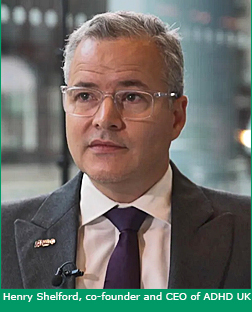
Henry Shelford, co-founder and chief executive of ADHD UK, who was diagnosed in his 40s, welcomed the review. "People don't go for a diagnosis of ADHD because they're worried well," he said. "They go because they're struggling, and I was struggling."
He warned that the consequences of a missed diagnosis, or of people being put off seeking help by "snowflake" criticism, can be serious.
Source: UCL News / Channel 4 News / Gov.UK
